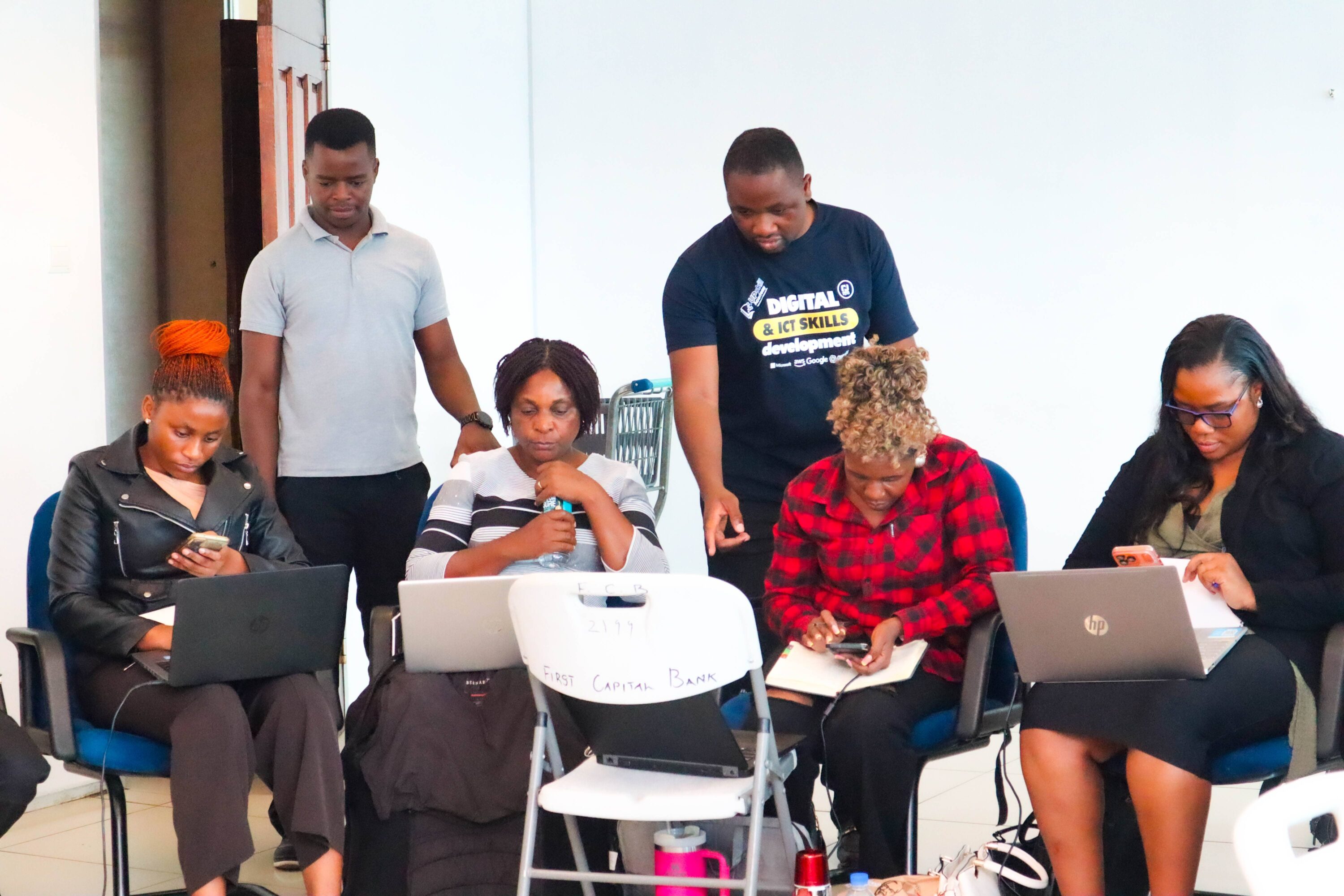
Highlights from our recent Workshop: Empowering the Next Generation of Creators and Entrepreneurs

In today’s fast-evolving digital economy, practical skills are no longer optional they are essential. Recognizing this need, We recently hosted a dynamic, full-day Digital Skills Workshop designed to equip participants with hands-on knowledge in three of the most in-demand fields: Graphic Design, Website Design, and Digital Marketing. This intensive crash course brought together aspiring entrepreneurs, students, professionals, and creatives from diverse backgrounds all united by one goal: to gain practical digital skills that can unlock income opportunities and career growth. A Practical, Results-Driven Learning Experience Unlike traditional theory-heavy sessions, this workshop was structured as a high-impact, hands-on learning experience. Participants didn’t just listen they created, built, and executed real projects throughout the day. The workshop covered: Graphic Design Participants were introduced to the fundamentals of visual communication, including: By the end of the session, attendees were able to design professional-looking marketing materials, a skill that is highly monetizable in today’s digital marketplace. Website Design In this segment, participants explored how to build functional and visually appealing websites without needing advanced coding skills. Key highlights included: Many participants built their first live website during the workshop, transforming ideas into real digital assets. Digital Marketing The final segment focused on how to turn digital skills into visibility and income. Topics covered: Participants gained clarity on how to attract customers, grow an audience, and generate revenue online. Accessible Learning for Everyone One of the most impactful aspects of the workshop was its inclusive structure: This approach ensured that financial barriers did not limit access to critical digital skills. A Diverse and Driven Audience The workshop attracted a wide range of participants, including: This diversity created a collaborative learning environment, where participants shared ideas, networked, and inspired each other. Why This Workshop Matters The demand for digital skills continues to rise across industries. Skills such as graphic design, website development, and digital marketing are no longer niche they are core competencies for success in the modern economy. Workshops like this provide: For many attendees, this was not just a workshop it was a turning point toward digital empowerment. Real Impact: From Learning to Earning By the end of the day, participants had: These are not just skills they are income-generating tools. Whether freelancing, starting a business, or enhancing a current career, attendees left equipped to take actionable steps. Looking Ahead: More Opportunities to Upskill Following the success of this workshop, Upskill Academy continues to expand its programs to reach more individuals ready to embrace the digital future. Upcoming initiatives will include: Final Thoughts The Digital Skills Workshop stands as a clear example of how accessible, practical education can transform lives. In just one day, participants moved from curiosity to capability—gaining skills that can reshape their financial and professional futures. If you are looking to: Then programs like this are the ideal starting point. Ready to Join the Next Workshop? Stay connected with Upskill Academy and be part of a growing community that is learning, building, and thriving in the digital economy.

Digital Wellness and Its Importance in the Workplace

Introduction In today’s hyper-connected world, technology is deeply embedded in how we work, communicate, and measure productivity. Emails, instant messaging, virtual meetings, cloud platforms, and mobile devices have made work faster and more flexible—but they have also introduced new challenges. Digital overload, constant notifications, blurred work-life boundaries, and screen fatigue are increasingly affecting employee health and performance. This is where digital wellness becomes critical. Digital wellness refers to the intentional and healthy use of digital technologies in a way that supports mental, physical, and emotional well-being. In the workplace, digital wellness is no longer a “nice-to-have”—it is a strategic necessity for sustainable productivity, employee satisfaction, and organizational success. What Is Digital Wellness? Digital wellness is the ability to use digital tools and technologies in a balanced, mindful, and responsible way. It focuses on maintaining control over technology use rather than allowing technology to control behavior, attention, and well-being. In the workplace, digital wellness addresses how employees interact with: A digitally well workplace enables employees to work efficiently while protecting their mental health, physical health, and personal time. Why Digital Wellness Matters in the Workplace 1. Preventing Burnout and Mental Fatigue Always-on work cultures create pressure to respond instantly, work longer hours, and stay constantly connected. Over time, this leads to burnout, anxiety, stress, and reduced job satisfaction. Digital wellness encourages healthy boundaries—such as defined communication hours, intentional breaks, and realistic response expectations—helping employees recharge and remain mentally resilient. 2. Improving Productivity and Focus Contrary to popular belief, constant connectivity does not improve productivity. Frequent notifications, multitasking, and excessive screen time reduce concentration and increase errors. A digitally well workplace promotes: This leads to higher-quality output and more efficient use of time. 3. Supporting Physical Health Prolonged screen use contributes to eye strain, headaches, poor posture, and repetitive strain injuries. Digital wellness includes ergonomic practices such as: Healthy digital habits reduce absenteeism and long-term health risks. 4. Enhancing Work-Life Balance Remote and hybrid work models have blurred the lines between work and personal life. Without clear boundaries, employees may struggle to disconnect. Digital wellness promotes: This balance improves morale, loyalty, and overall well-being. The Role of Leadership in Digital Wellness Digital wellness starts at the top. Leaders and managers play a critical role in shaping digital culture. Healthy leadership behaviors include: When leaders prioritize digital wellness, employees feel supported and empowered to do the same. Digital Wellness and Technology Use Technology itself is not the problem—how it is used matters. Healthy Digital Practices at Work With the rise of AI and automation, digital wellness also includes teaching employees how to use AI tools responsibly—enhancing productivity without increasing pressure or unrealistic expectations. The African Workplace Context In Africa, rapid digital adoption is transforming workplaces across sectors. Mobile technology, remote work, and digital platforms are expanding opportunities, but they also introduce digital stress—especially where digital literacy and infrastructure vary. Digital wellness is especially important in African workplaces to: Organizations that invest in digital wellness alongside digital skills training create more inclusive, resilient, and productive teams. Practical Strategies for Promoting Digital Wellness at Work For Organizations For Employees The Business Case for Digital Wellness Organizations that prioritize digital wellness benefit from: Digital wellness is not about reducing performance—it is about sustaining it. Conclusion As workplaces become increasingly digital, the well-being of employees must remain at the center of transformation. Digital wellness ensures that technology enhances work rather than overwhelming it. By fostering healthy digital habits, supportive leadership, and balanced work cultures, organizations can create workplaces that are productive, humane, and future-ready. In the digital age, true success lies not only in how fast we work—but in how well we work.

The Future of Jobs and Skills in the Age of Artificial Intelligence

Introduction Artificial Intelligence (AI) is no longer a distant or emerging technology—it is already reshaping how we work, what skills are valued, and how economies function. From automated customer service and intelligent data analysis to AI-powered design and decision-making, the impact of AI on jobs and skills is profound and irreversible. Rather than simply eliminating jobs, AI is transforming them. Some roles are becoming obsolete, many are evolving, and entirely new careers are emerging. The future of work will belong to individuals, organizations, and nations that understand this shift and proactively invest in relevant skills. How Artificial Intelligence Is Changing the World of Work AI systems excel at tasks that involve pattern recognition, data processing, prediction, and automation. As a result, jobs that rely heavily on repetitive, rule-based activities are the most vulnerable to automation. Jobs Most Affected by AI However, automation does not necessarily mean job loss—it often means job transformation. Workers in these fields are increasingly required to supervise AI systems, interpret outputs, and focus on higher-value tasks. Jobs That Are Growing Because of AI AI is also creating demand for new roles and expanding existing ones, including: In addition, many traditional professions—such as healthcare, education, law, finance, and agriculture—are being augmented by AI tools rather than replaced by them. The Shift From Job Titles to Skills One of the most significant changes driven by AI is the shift from rigid job titles to flexible, skill-based work. Employers are increasingly prioritizing what individuals can do over where they studied or what qualifications they hold. This shift places continuous learning at the center of career success. Workers will need to reskill and upskill multiple times throughout their careers to remain relevant. Core Skills for the Future of Work The Impact of AI on Education and Training Education systems must evolve to keep pace with AI-driven change. Traditional models that focus on memorization and standardized testing are becoming less relevant. Future-ready education should emphasize: Short courses, bootcamps, and online learning platforms are playing a critical role in enabling fast and flexible skills acquisition. The African Context: Challenges and Opportunities For Africa, AI presents both risks and enormous opportunities. The continent has a young and rapidly growing population, making skills development an urgent priority. Key Opportunities Key Challenges By investing in digital skills, AI literacy, and innovation ecosystems, African countries can position themselves as creators—not just consumers—of AI technologies Preparing for the Future: What Individuals and Organizations Must Do For Individuals For Organizations For Governments and Institutions Conclusion The future of jobs will not be defined by AI alone, but by how humans choose to adapt, learn, and collaborate with intelligent technologies. AI is a powerful tool—one that can increase productivity, create new opportunities, and improve quality of life. Those who invest in future-ready skills today will be best positioned to thrive in tomorrow’s job market. In the age of artificial intelligence, the most valuable skill of all is the ability to learn, unlearn, and relearn.

Robotics and the Future: Transforming Africa Through Innovation and Education

Introduction Robotics is no longer a concept reserved for science fiction or highly industrialized nations. It is rapidly becoming a powerful force shaping economies, education systems, and everyday life across the globe. In Africa, robotics presents a unique opportunity—not only to accelerate development but also to solve local challenges using locally developed solutions. From agriculture and healthcare to education and industry, robotics is influencing how Africa prepares for the future. How Robotics Is Shaping the Future Robotics refers to the design, construction, and use of machines that can perform tasks automatically or semi-automatically. As robotics technology advances, it is increasingly integrated with Artificial Intelligence (AI), Internet of Things (IoT), and data analytics. Globally, robots are improving productivity, reducing human exposure to dangerous work, and increasing efficiency in manufacturing, logistics, healthcare, and services. In the future, robots will not replace humans entirely but will work alongside them—augmenting human capabilities and creating new types of jobs that require technical, creative, and problem-solving skills. For Africa, this future is especially important. With a young and fast-growing population, the continent must prepare its workforce for technology-driven economies. Robotics offers a pathway to leapfrog traditional development stages and participate competitively in the global digital economy. Robotics in the African Context Africa faces unique challenges such as food insecurity, limited access to healthcare, infrastructure gaps, and unemployment. Robotics can play a critical role in addressing these challenges: Countries such as South Africa, Kenya, Nigeria, Rwanda, and Ghana are already investing in robotics labs, innovation hubs, and STEM programs, signaling a growing commitment to future-ready skills. The Role of Robotics in Education Education is the foundation for Africa’s robotics future. Introducing robotics in schools helps learners move beyond theory into hands-on, practical learning. Key Benefits of Robotics Education Robotics education does not require expensive equipment. With affordable kits, open-source platforms, and community-based training programs, schools and learning centers across Africa can introduce robotics even in resource-limited environments. Robotics, Youth, and the African Future Africa’s greatest asset is its youth. By equipping young people with robotics and digital skills, the continent can nurture innovators, engineers, and entrepreneurs who build solutions for African problems. Robotics clubs, coding bootcamps, maker spaces, and AI & robotics academies are already empowering young Africans to compete globally. With the right investment, policy support, and public-private partnerships, robotics can become a major driver of economic growth and social development. Conclusion Robotics is not just about machines—it is about shaping the future of work, education, and innovation. In the African context, robotics offers a powerful opportunity to bridge skills gaps, solve local challenges, and position the continent as a creator of technology rather than just a consumer. By investing in robotics education today, Africa is investing in a smarter, more inclusive, and more resilient future.

Bill Gates Reveals 3 Careers That AI Can’t Replace – And They Matter More Than Ever for Africa

Bill Gates Reveals 3 Careers That AI Can’t Replace – And They Matter More Than Ever for Africa In a world where technology is evolving faster than ever, many Africans are rightly asking: “Will my job still exist in 10 years?” With AI creeping into everything from customer service to agriculture, the fear of being replaced is real. But recently, Microsoft co-founder and global tech leader Bill Gates gave us some clarity — and hope. Speaking on The Tonight Show Starring Jimmy Fallon in early 2025, Gates shared three career paths that are likely to stay safe from automation, and they offer huge opportunities for Africa’s next generation of leaders, innovators, and change-makers. 1.⁠ ⁠Biology – The Human Element in Health & Science Gates pointed to biology as a career that AI won’t easily replace. While machines can process data and run simulations, they still can’t match the instincts, creativity, and judgment of a trained human biologist — especially when it comes to solving real-world health challenges.  n Africa, where we continue to battle diseases like malaria, HIV, and now rising cases of non-communicable diseases (like diabetes and cancer), biology is more than just a career — it’s a mission. From labs in Lagos to field research in Lusaka, biology professionals are leading the charge in public health, pharmaceuticals, and agriculture. As Gates said: “The art of forming hypotheses and pushing the boundaries of medical breakthroughs is a deeply human endeavor.” 2.⁠ ⁠Software Development – Africa’s Digital Goldmine Next up is software development. Yes, AI can write code — but it still lacks human creativity, critical thinking, and real-world context. And with the rise of African tech hubs in Nairobi, Cape Town, Lagos, and Harare, the demand for skilled developers who can design, adapt, and manage complex systems is only growing. Whether it’s building fintech apps for the unbanked, EdTech platforms for rural students, or AI tools that speak Swahili or Zulu, Africa needs developers with local insight and global vision. Gates noted that while AI is a powerful tool, it still needs humans to guide it and infuse it with innovation. 3.⁠ ⁠The Energy Sector – Powering Africa’s Future Let’s Talk Do these insights from Bill Gates resonate with your dreams or career plans? Are you already in one of these sectors — or considering a move? Share your thoughts in the comments. Tag a friend or young person thinking about their future. Let’s spark a real conversation about where Africa is headed — and how we can all be part of the story. The third career Gates recommended is in the energy sector, and it couldn’t be more relevant for Africa. From managing hydroelectric plants on the Congo River to maintaining solar microgrids in off-grid rural villages, the continent’s energy future requires skilled human decision-makers. AI can help monitor and predict energy use, but it’s people who make the final calls — especially when public safety or national infrastructure is at stake. Whether you’re working on wind farms in Kenya or engineering thermal plants in South Africa, the energy sector offers resilience and relevance in a changing world. Gates put it clearly: “Strategic decisions in energy require human intervention due to the criticality of their implications.” Why This Matters for AfricaAs AI begins to change industries from agriculture to education, we have a choice: be replaced, or reposition ourselves. These three fields — biology, software development, and energy — aren’t just about survival. They are about shaping Africa’s future. So, whether you’re a student choosing your degree, a graduate navigating your next steps, or a professional considering a pivot — this is your chance to future-proof your career while solving real African challenges.

7 Effective Digital Marketing Channels ( Part 1 )

Digital marketing channels are the platforms used to distribute digital marketing content. When promoting a new product, you may select one or more channels to communicate your message. Popular digital marketing channels include social media, video marketing, and influencer marketing.

Zim Companies Urge CEOs to Replace IT Workers with AI Amid Tough Economic Times

Zim Companies Urge CEOs to Replace IT Workers with AI Amid Tough Economic Times Zimbabwean companies are increasingly urging their executives to embrace AI-driven strategies — and for many IT professionals, that could mean job cuts. Following the global trend, the wave of IT layoffs that began in 2024 is showing signs of reaching our shores, driven by the pursuit of efficiency and the looming fear of an economic slowdown. Globally, over 238,000 IT jobs were lost in 2024, With another 76,000 already gone in early 2025, and the ripple effects are starting to be felt locally. Many Zimbabwean boards of directors are reportedly pushing CEOs to reduce operational costs by as much as 20%, largely through replacing routine IT roles with AI systems. According to HR and recruitment professionals, these decisions are motivated not just by cost-saving, but also by a shift toward more agile, AI-powered business models. “Companies are under pressure to stay competitive — whether in banking, telecoms, or logistics — and AI is seen as a fast-track to that,” said one Harare-based IT recruiter. May Set the Tone May was a defining month globally. Microsoft laid off 6,000 workers, stating that AI now writes 30% of its internal code. Walmart followed with 1,500 job cuts, many of them affecting tech teams. IBM wasn’t far behind, reportedly letting go of 8,000 employees, especially in roles like HR that AI can now support or even fully automate.Back home, some large local firms are starting to take similar steps — quietly phasing out IT roles considered “low-skill” or “easily automated,” such as data entry clerks, desktop support, and system testers. Recession Planning + AI Efficiency Even as global forecasts like J.P. Morgan revise down the likelihood of a 2025 recession, Zimbabwean companies remain cautious. Exchange rate volatility, limited access to forex, and high operating costs are forcing firms to look inward for savings. AI is increasingly viewed as a solution that delivers long-term productivity gains without the recurring cost of salaries and benefits. “It’s no longer a matter of if companies will adopt AI, but when — and who’ll be left behind,” said a senior manager at a local telecom firm. IT Job Market Shifting — AI Skills Dominate Career experts say companies are moving away from mass hiring in IT and toward selective recruitment, focusing on hybrid professionals who combine domain knowledge with AI capabilities. “Someone with product understanding and practical AI skills can name their price today,” said a representative from a local job-matching platform. “We’re seeing increased demand for roles like AI product managers, prompt engineers, and cloud automation experts — even from SMEs and startups.” Experts advise Zimbabwean IT professionals to urgently upskill in AI, automation tools, and cloud services to stay relevant. Entry-level cybersecurity analysts, manual QA testers, and general IT support agents are particularly at risk of displacement. “Jobs that follow predictable patterns or can be scripted are being handed over to bots,” said Nic Adams, CEO of a global cybersecurity automation firm. “We’re entering a world where AI handles the triage faster than any junior support technician ever could.” It’s About Transformation, Not Just RetrenchmentWhile some companies still see AI as a cost-cutting tool, others are using it to unlock growth and digital innovation. One local fintech executive said, “We’re not firing our people to replace them with AI — we’re hiring those who know how to use AI to scale our services.” Still, systemic automation continues to reshape IT departments. For Zimbabwean firms — especially in sectors like finance, healthcare, logistics, and retail — this may just be the beginning of a much larger shift.

The Link between Graphic Design & Digital Marketing

Graphic design is a vital element of digital marketing. It plays a key role in engaging customers, promoting products and services, and shaping a brand’s identity. In this article, we’ll explore the importance of graphic design in marketing and its impact on brand success.

Upskill Academy’s 2024 Second Quarter Graduation: Shaping Careers and Businesses for the Digital Age

Shaping Careers and Businesses for the Digital Age Upskill Academy proudly hosted its 2024 Second Quarter Graduation Ceremony, marking another significant milestone in our journey to develop practical, future-ready skills among Zimbabwe’s youth and professionals. This celebration was not only a moment to honour our graduates but also a powerful learning experience featuring impactful sessions from esteemed industry experts. Recognising Hard Work and Dedication  Graduation day is always a moment of reflection and excitement at Upskill Academy. For our second quarter cohort, it was a celebration of determination, growth, and new beginnings. Each student who received a certificate had invested countless hours acquiring critical skills designed to make them competitive in an ever-evolving world. Our 2024 graduates demonstrated resilience and an eagerness to learn — qualities that are now more important than ever as they embark on building meaningful careers and ventures. Enriching Minds: Keynote Learning Sessions This special event featured two insightful masterclasses that added immense value to our graduates and guests: Mr. Stanly Zvavamwe: Guiding Students Towards Career Clarity Mr. Stanly Zvavamwe, a respected career coach and mentor, delivered a compelling session on Career Guidance. He walked students through the importance of aligning their interests, strengths, and values with the right career paths. Using relatable examples and interactive discussions, he highlighted practical steps for choosing a career, setting achievable goals, and staying adaptable in an ever-changing job market. His talk reminded students that career success is not just about having qualifications but also about self-awareness, continuous learning, and the courage to seize opportunities. Many attendees expressed how the session helped clear their doubts about which career paths to pursue and how to plan ahead strategically. A Note of Gratitude We extend our heartfelt appreciation to Mr. Stanly Zvavamwe and Mr. Phillip Jonhera for their dedication to nurturing the next generation of leaders and innovators. We also thank the families, friends, trainers, and the entire Upskill Academy team whose support makes our vision a reality. What’s Next? Our second quarter graduates are proof that learning never stops — and neither do we. Upskill Academy will continue to design programs and events that empower Zimbabweans with practical skills, career clarity, and the digital tools needed to thrive in a competitive world. Congratulations to the Class of 2024 (Q2)! May your journey be filled with purpose, growth, and success. Mr. Phillip Jonhera: Building a Business in the Digital World Our very own Mr. Phillip Jonhera, a trusted digital strategist and business mentor, inspired attendees with an engaging masterclass on How to Grow a Business in the Digital World. He unpacked actionable insights on using digital platforms to reach customers, build a brand, and scale a business affordably. From leveraging social media and email marketing to understanding digital advertising and e-commerce trends, Mr. Jonhera’s session was filled with practical strategies that aspiring entrepreneurs can apply immediately. He also stressed the importance of storytelling, consistency, and staying customer-focused in the digital age, encouraging graduates to embrace technology as an enabler for growth rather than a barrier. A Launchpad for the Future The combination of this powerful learning and the graduation celebration created an inspiring environment that reinforced Upskill Academy’s commitment to bridging the gap between theory and practice. Graduates left with not only certificates in hand but also fresh ideas and motivation to build purposeful careers and resilient businesses. As we reflect on this milestone, we are proud to see our graduates stepping out ready to make meaningful contributions to their communities and industries.