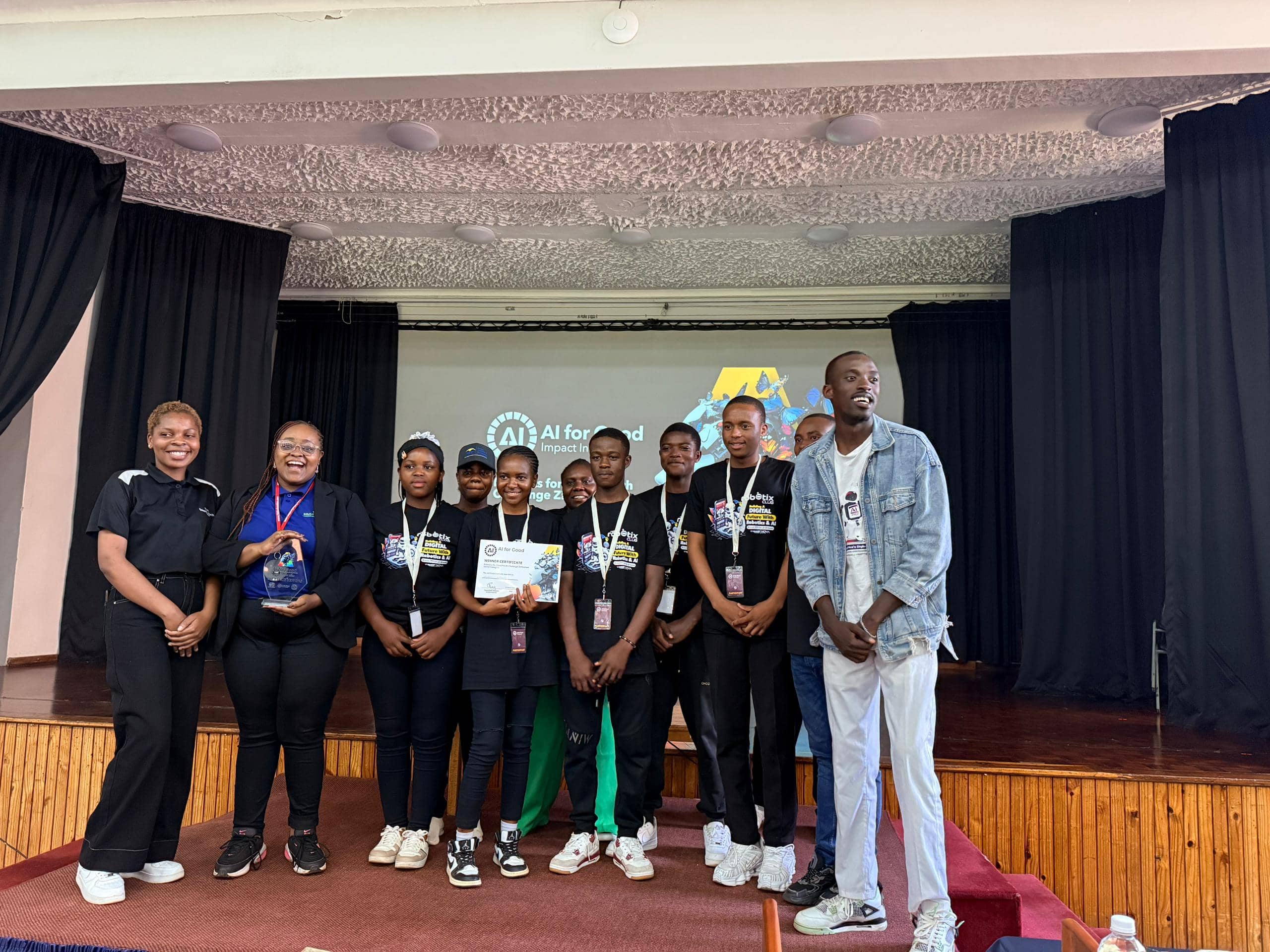
Upskill Robotics Club Wins AI for Good Robotics Competition

The future of technology in Zimbabwe is bright, and it is being built by young innovators who are learning to solve real-world problems using robotics and artificial intelligence. The Upskill Robotics Club recently achieved a historic milestone after being crowned winners of the AI for Good Robotics Competition in Zimbabwe. This victory is not only a proud moment for the students involved but also a powerful demonstration of what happens when young minds are exposed to the right tools, mentorship, and opportunities. A Victory That Inspires a Generation The AI for Good Robotics Competition brings together young innovators who use robotics, programming, and artificial intelligence to design solutions that address real challenges in society. Students from the Upskill Robotics Club impressed judges with their creativity, technical ability, teamwork, and problem-solving skills. Their innovative project demonstrated how robotics and AI can be used to create practical solutions for communities. After a competitive process, the team emerged as the national winners, proving that Zimbabwean youth can compete and excel on the global stage. Next Stop: Switzerland Winning the competition means that the Upskill Robotics Club will now represent Zimbabwe internationally at the AI for Good Global Summit in Switzerland. This global stage brings together innovators, technology leaders, researchers, and young inventors from around the world to showcase how technology can solve some of humanity’s biggest challenges. For these students, the journey from learning robotics basics to representing their country internationally is a life-changing opportunity. Why Robotics Education Matters for Children The world is rapidly changing as technology becomes central to nearly every industry. Robotics education prepares children for this future by developing essential skills that go far beyond coding. When children learn robotics, they develop: 1. Problem-Solving SkillsRobotics teaches students how to break down complex problems and develop logical solutions. 2. Creativity and InnovationStudents design and build their own robots, encouraging imagination and creative thinking. 3. Critical ThinkingProgramming robots requires analytical thinking and the ability to test and improve ideas. 4. Confidence and TeamworkWorking on robotics projects helps children learn collaboration and builds confidence in their abilities. 5. Future Career SkillsFields such as Artificial Intelligence, Engineering, Software Development, and Automation are growing rapidly worldwide. Robotics introduces children to these future careers early. How Upskill Robotics Club Is Empowering Young Innovators The Upskill Robotics Club was created with one mission: to empower young innovators with practical technology skills. Through hands-on learning, students are introduced to: Rather than just learning theory, students build, test, and program real robots, gaining practical experience that prepares them for the digital future. Building Zimbabwe’s Next Generation of Tech Leaders The victory of the Upskill Robotics Club is more than just a competition win. It represents a growing movement to prepare Zimbabwe’s youth for the Fourth Industrial Revolution, where technologies such as AI, robotics, and automation will shape industries and economies. By investing in digital and robotics education today, we are equipping the next generation with the skills they need to become engineers, innovators, entrepreneurs, and global problem-solvers. Enroll Your Child in the Upskill Robotics Club Parents who want their children to develop future-ready skills now have an opportunity to join this exciting journey. The Upskill Robotics Club welcomes students who are curious about technology and eager to learn how robots work. Children will gain hands-on experience in: Most importantly, they will join a community of young innovators who are shaping the future. The Future Starts Now The success of the Upskill Robotics Club proves that with the right training and mentorship, Zimbabwean youth can compete and win on the global stage. Today’s robotics students are tomorrow’s engineers, scientists, and technology leaders. If your child is curious about technology and innovation, this is the perfect time to start their journey. Join the Upskill Robotics Club and help your child become part of the next generation of innovators.

Digital Wellness and Its Importance in the Workplace

Introduction In today’s hyper-connected world, technology is deeply embedded in how we work, communicate, and measure productivity. Emails, instant messaging, virtual meetings, cloud platforms, and mobile devices have made work faster and more flexible—but they have also introduced new challenges. Digital overload, constant notifications, blurred work-life boundaries, and screen fatigue are increasingly affecting employee health and performance. This is where digital wellness becomes critical. Digital wellness refers to the intentional and healthy use of digital technologies in a way that supports mental, physical, and emotional well-being. In the workplace, digital wellness is no longer a “nice-to-have”—it is a strategic necessity for sustainable productivity, employee satisfaction, and organizational success. What Is Digital Wellness? Digital wellness is the ability to use digital tools and technologies in a balanced, mindful, and responsible way. It focuses on maintaining control over technology use rather than allowing technology to control behavior, attention, and well-being. In the workplace, digital wellness addresses how employees interact with: A digitally well workplace enables employees to work efficiently while protecting their mental health, physical health, and personal time. Why Digital Wellness Matters in the Workplace 1. Preventing Burnout and Mental Fatigue Always-on work cultures create pressure to respond instantly, work longer hours, and stay constantly connected. Over time, this leads to burnout, anxiety, stress, and reduced job satisfaction. Digital wellness encourages healthy boundaries—such as defined communication hours, intentional breaks, and realistic response expectations—helping employees recharge and remain mentally resilient. 2. Improving Productivity and Focus Contrary to popular belief, constant connectivity does not improve productivity. Frequent notifications, multitasking, and excessive screen time reduce concentration and increase errors. A digitally well workplace promotes: This leads to higher-quality output and more efficient use of time. 3. Supporting Physical Health Prolonged screen use contributes to eye strain, headaches, poor posture, and repetitive strain injuries. Digital wellness includes ergonomic practices such as: Healthy digital habits reduce absenteeism and long-term health risks. 4. Enhancing Work-Life Balance Remote and hybrid work models have blurred the lines between work and personal life. Without clear boundaries, employees may struggle to disconnect. Digital wellness promotes: This balance improves morale, loyalty, and overall well-being. The Role of Leadership in Digital Wellness Digital wellness starts at the top. Leaders and managers play a critical role in shaping digital culture. Healthy leadership behaviors include: When leaders prioritize digital wellness, employees feel supported and empowered to do the same. Digital Wellness and Technology Use Technology itself is not the problem—how it is used matters. Healthy Digital Practices at Work With the rise of AI and automation, digital wellness also includes teaching employees how to use AI tools responsibly—enhancing productivity without increasing pressure or unrealistic expectations. The African Workplace Context In Africa, rapid digital adoption is transforming workplaces across sectors. Mobile technology, remote work, and digital platforms are expanding opportunities, but they also introduce digital stress—especially where digital literacy and infrastructure vary. Digital wellness is especially important in African workplaces to: Organizations that invest in digital wellness alongside digital skills training create more inclusive, resilient, and productive teams. Practical Strategies for Promoting Digital Wellness at Work For Organizations For Employees The Business Case for Digital Wellness Organizations that prioritize digital wellness benefit from: Digital wellness is not about reducing performance—it is about sustaining it. Conclusion As workplaces become increasingly digital, the well-being of employees must remain at the center of transformation. Digital wellness ensures that technology enhances work rather than overwhelming it. By fostering healthy digital habits, supportive leadership, and balanced work cultures, organizations can create workplaces that are productive, humane, and future-ready. In the digital age, true success lies not only in how fast we work—but in how well we work.

The Future of Jobs and Skills in the Age of Artificial Intelligence

Introduction Artificial Intelligence (AI) is no longer a distant or emerging technology—it is already reshaping how we work, what skills are valued, and how economies function. From automated customer service and intelligent data analysis to AI-powered design and decision-making, the impact of AI on jobs and skills is profound and irreversible. Rather than simply eliminating jobs, AI is transforming them. Some roles are becoming obsolete, many are evolving, and entirely new careers are emerging. The future of work will belong to individuals, organizations, and nations that understand this shift and proactively invest in relevant skills. How Artificial Intelligence Is Changing the World of Work AI systems excel at tasks that involve pattern recognition, data processing, prediction, and automation. As a result, jobs that rely heavily on repetitive, rule-based activities are the most vulnerable to automation. Jobs Most Affected by AI However, automation does not necessarily mean job loss—it often means job transformation. Workers in these fields are increasingly required to supervise AI systems, interpret outputs, and focus on higher-value tasks. Jobs That Are Growing Because of AI AI is also creating demand for new roles and expanding existing ones, including: In addition, many traditional professions—such as healthcare, education, law, finance, and agriculture—are being augmented by AI tools rather than replaced by them. The Shift From Job Titles to Skills One of the most significant changes driven by AI is the shift from rigid job titles to flexible, skill-based work. Employers are increasingly prioritizing what individuals can do over where they studied or what qualifications they hold. This shift places continuous learning at the center of career success. Workers will need to reskill and upskill multiple times throughout their careers to remain relevant. Core Skills for the Future of Work The Impact of AI on Education and Training Education systems must evolve to keep pace with AI-driven change. Traditional models that focus on memorization and standardized testing are becoming less relevant. Future-ready education should emphasize: Short courses, bootcamps, and online learning platforms are playing a critical role in enabling fast and flexible skills acquisition. The African Context: Challenges and Opportunities For Africa, AI presents both risks and enormous opportunities. The continent has a young and rapidly growing population, making skills development an urgent priority. Key Opportunities Key Challenges By investing in digital skills, AI literacy, and innovation ecosystems, African countries can position themselves as creators—not just consumers—of AI technologies Preparing for the Future: What Individuals and Organizations Must Do For Individuals For Organizations For Governments and Institutions Conclusion The future of jobs will not be defined by AI alone, but by how humans choose to adapt, learn, and collaborate with intelligent technologies. AI is a powerful tool—one that can increase productivity, create new opportunities, and improve quality of life. Those who invest in future-ready skills today will be best positioned to thrive in tomorrow’s job market. In the age of artificial intelligence, the most valuable skill of all is the ability to learn, unlearn, and relearn.

Robotics and the Future: Transforming Africa Through Innovation and Education

Introduction Robotics is no longer a concept reserved for science fiction or highly industrialized nations. It is rapidly becoming a powerful force shaping economies, education systems, and everyday life across the globe. In Africa, robotics presents a unique opportunity—not only to accelerate development but also to solve local challenges using locally developed solutions. From agriculture and healthcare to education and industry, robotics is influencing how Africa prepares for the future. How Robotics Is Shaping the Future Robotics refers to the design, construction, and use of machines that can perform tasks automatically or semi-automatically. As robotics technology advances, it is increasingly integrated with Artificial Intelligence (AI), Internet of Things (IoT), and data analytics. Globally, robots are improving productivity, reducing human exposure to dangerous work, and increasing efficiency in manufacturing, logistics, healthcare, and services. In the future, robots will not replace humans entirely but will work alongside them—augmenting human capabilities and creating new types of jobs that require technical, creative, and problem-solving skills. For Africa, this future is especially important. With a young and fast-growing population, the continent must prepare its workforce for technology-driven economies. Robotics offers a pathway to leapfrog traditional development stages and participate competitively in the global digital economy. Robotics in the African Context Africa faces unique challenges such as food insecurity, limited access to healthcare, infrastructure gaps, and unemployment. Robotics can play a critical role in addressing these challenges: Countries such as South Africa, Kenya, Nigeria, Rwanda, and Ghana are already investing in robotics labs, innovation hubs, and STEM programs, signaling a growing commitment to future-ready skills. The Role of Robotics in Education Education is the foundation for Africa’s robotics future. Introducing robotics in schools helps learners move beyond theory into hands-on, practical learning. Key Benefits of Robotics Education Robotics education does not require expensive equipment. With affordable kits, open-source platforms, and community-based training programs, schools and learning centers across Africa can introduce robotics even in resource-limited environments. Robotics, Youth, and the African Future Africa’s greatest asset is its youth. By equipping young people with robotics and digital skills, the continent can nurture innovators, engineers, and entrepreneurs who build solutions for African problems. Robotics clubs, coding bootcamps, maker spaces, and AI & robotics academies are already empowering young Africans to compete globally. With the right investment, policy support, and public-private partnerships, robotics can become a major driver of economic growth and social development. Conclusion Robotics is not just about machines—it is about shaping the future of work, education, and innovation. In the African context, robotics offers a powerful opportunity to bridge skills gaps, solve local challenges, and position the continent as a creator of technology rather than just a consumer. By investing in robotics education today, Africa is investing in a smarter, more inclusive, and more resilient future.

Zim Companies Urge CEOs to Replace IT Workers with AI Amid Tough Economic Times

Zim Companies Urge CEOs to Replace IT Workers with AI Amid Tough Economic Times Zimbabwean companies are increasingly urging their executives to embrace AI-driven strategies — and for many IT professionals, that could mean job cuts. Following the global trend, the wave of IT layoffs that began in 2024 is showing signs of reaching our shores, driven by the pursuit of efficiency and the looming fear of an economic slowdown. Globally, over 238,000 IT jobs were lost in 2024, With another 76,000 already gone in early 2025, and the ripple effects are starting to be felt locally. Many Zimbabwean boards of directors are reportedly pushing CEOs to reduce operational costs by as much as 20%, largely through replacing routine IT roles with AI systems. According to HR and recruitment professionals, these decisions are motivated not just by cost-saving, but also by a shift toward more agile, AI-powered business models. “Companies are under pressure to stay competitive — whether in banking, telecoms, or logistics — and AI is seen as a fast-track to that,” said one Harare-based IT recruiter. May Set the Tone May was a defining month globally. Microsoft laid off 6,000 workers, stating that AI now writes 30% of its internal code. Walmart followed with 1,500 job cuts, many of them affecting tech teams. IBM wasn’t far behind, reportedly letting go of 8,000 employees, especially in roles like HR that AI can now support or even fully automate.Back home, some large local firms are starting to take similar steps — quietly phasing out IT roles considered “low-skill” or “easily automated,” such as data entry clerks, desktop support, and system testers. Recession Planning + AI Efficiency Even as global forecasts like J.P. Morgan revise down the likelihood of a 2025 recession, Zimbabwean companies remain cautious. Exchange rate volatility, limited access to forex, and high operating costs are forcing firms to look inward for savings. AI is increasingly viewed as a solution that delivers long-term productivity gains without the recurring cost of salaries and benefits. “It’s no longer a matter of if companies will adopt AI, but when — and who’ll be left behind,” said a senior manager at a local telecom firm. IT Job Market Shifting — AI Skills Dominate Career experts say companies are moving away from mass hiring in IT and toward selective recruitment, focusing on hybrid professionals who combine domain knowledge with AI capabilities. “Someone with product understanding and practical AI skills can name their price today,” said a representative from a local job-matching platform. “We’re seeing increased demand for roles like AI product managers, prompt engineers, and cloud automation experts — even from SMEs and startups.” Experts advise Zimbabwean IT professionals to urgently upskill in AI, automation tools, and cloud services to stay relevant. Entry-level cybersecurity analysts, manual QA testers, and general IT support agents are particularly at risk of displacement. “Jobs that follow predictable patterns or can be scripted are being handed over to bots,” said Nic Adams, CEO of a global cybersecurity automation firm. “We’re entering a world where AI handles the triage faster than any junior support technician ever could.” It’s About Transformation, Not Just RetrenchmentWhile some companies still see AI as a cost-cutting tool, others are using it to unlock growth and digital innovation. One local fintech executive said, “We’re not firing our people to replace them with AI — we’re hiring those who know how to use AI to scale our services.” Still, systemic automation continues to reshape IT departments. For Zimbabwean firms — especially in sectors like finance, healthcare, logistics, and retail — this may just be the beginning of a much larger shift.

The Impact of Artificial Intelligence on Digital Skills Development

The Impact of Artificial Intelligence on Digital Skills Development What is Artificial Intelligence ? Artificial intelligence is a field of science concerned with building computers and machines that can reason, learn, and act in such a way that would normally require human intelligence or that involves data whose scale exceeds what humans can analyze. The Impact of Artificial Intelligence on Digital Skills Development Shaping Digital Skills Through Artificial IntelligenceArtificial Intelligence (AI) is reshaping digital skills across industries. LinkedIn reported a 91% growth in AI-related skills in 2020, highlighting the increasing demand for AI expertise. The World Economic Forum predicts AI and automation will boost global GDP by 10% by 2025, underscoring the necessity for individuals to acquire these skills to stay competitive in an evolving job market. Revolutionizing Digital Skills with AIAI is a catalyst for upskilling and reskilling in today’s job market. The World Economic Forum forecasts AI will create 133 million new roles by 2022. Companies leveraging AI for skills development can unlock $4.5 trillion annually, according to McKinsey. AI-powered learning platforms, like IBM’s, report a 37% increase in course completion rates, showcasing the power of AI in personalizing and enhancing learning outcomes. AI’s Transformative Role in Digital Skills EvolutionAI is revolutionizing digital skills by creating new opportunities and reshaping existing roles. By 2022, AI is expected to generate 133 million jobs globally. McKinsey estimates 375 million workers may need to switch occupations due to AI-driven changes. For instance, AI in healthcare, such as medical imaging systems, has enhanced diagnostic accuracy, demonstrating its capacity to redefine skills and improve outcomes. Enhancing Digital Skill Acquisition with AIAI-driven tools enhance learning by personalizing experiences and increasing efficiency by up to 50%, according to the World Economic Forum. Platforms like Coursera use AI to improve course completion rates by 25%, offering learners tailored recommendations. This highlights AI’s role in democratizing education and enhancing skills acquisition globally.Navigating AI’s Impact on Digital Skills DevelopmentThe adoption of AI and automation necessitates widespread upskilling, with 54% of employees requiring significant training by 2022, as per the World Economic Forum. AI-driven education systems have improved student engagement by 30% and digital proficiency by 20%, demonstrating their transformative potential in education and workforce readiness. The Intersection of AI and Digital Skills EnhancementAI offers tailored learning pathways through data-driven analysis of individual needs. Studies reveal a 30% improvement in engagement and retention when AI-powered tools are employed. This emphasizes AI’s role in fostering adaptive and effective skill development in an evolving digital landscape. Empowering Individuals with AI-Driven Skill AdvancementAI in education improves learning outcomes by 30% and retention rates by 46%, according to UNESCO. AI-driven training programs increase job placement rates by 25% and salaries by 20%, underscoring their tangible benefits. AI empowers individuals to excel in a competitive digital era. Conclusion AI is revolutionizing digital skills development by personalizing learning, accelerating skill acquisition, and bridging skill gaps. Its transformative potential hinges on ethical and responsible implementation, prioritizing critical thinking, creativity, and human-centered competencies. By embracing AI, we can build a digitally skilled workforce equipped to meet the demands of the 21st century.